
Effluent Pond Stirring: Why It Matters (and What Happens When You Skip It)
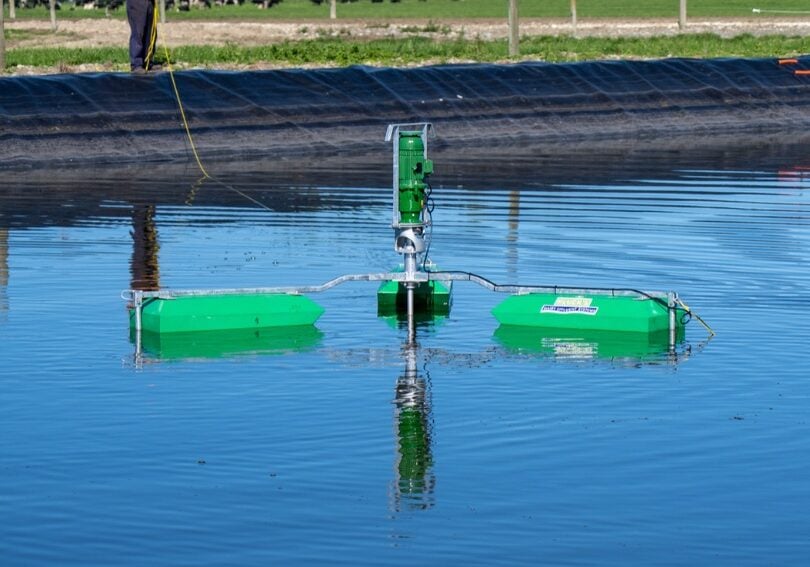
An effluent stirrer is easy to forget until it stops. Here's what pond stirring actually does, what happens when solids settle, and how Plucks sizes stirrers to your pond, tank or sump using measured dimensions and solids loading rather than guesswork.
Ask most farmers what an effluent stirrer actually does day to day and you’ll get a rough answer at best – it’s one of those bits of kit that quietly does its job in the background until something goes wrong. But pond stirring is one of the simplest things you can get right in a dairy effluent system, and one of the most expensive to ignore. Whether you’re running a lined pond, a concrete tank or a sump under the yard, a correctly sized effluent stirrer is what keeps the whole system pumpable, consistent and compliant.
What does ‘stirring’ an effluent pond actually involve?
An effluent stirrer keeps the solids in a pond, tank, or sump suspended in the liquid rather than letting them settle out. A motor-driven impeller – mounted on a flotation raft for ponds and tanks, or fixed in place for confined sumps – keeps the whole volume moving continuously, so nothing has the chance to drop out and build up on the bottom or crust over on top.
Why does it matter for your effluent system?
Effluent that isn’t kept moving separates. Heavier solids sink and consolidate into sludge; lighter material forms a crust at the surface. Once that happens, the pond becomes more anaerobic, odour increases, and the effluent itself becomes inconsistent – which makes pumping unreliable and increases the risk of blockages further down the line in irrigation nozzles and pipework. Regular stirring helps maintain a more aerobic and biologically active pond environment, keeps nutrients evenly distributed, and keeps the whole system working the way it’s meant to.
What actually happens if the stirrer stops?
Solids start settling within hours of a stirrer being switched off. From there, sludge builds at the base and a crust forms at the surface, the pond turns increasingly anaerobic, and odour ramps up. The longer stirring is skipped, the more sludge accumulates – and once that’s built up, removing it is a genuinely expensive and disruptive job, not a quick fix.
How is an effluent stirrer sized for a pond, tank or sump?
Stirrer selection is based on pond dimensions, shape, volume, solids loading and site conditions – not depth alone. A long, shallow pond mixes differently from a deep, square one; a pond taking heavy solids from a feed pad needs more mixing energy than one fed from a screened yard wash. That’s why Plucks sizes from measured dimensions and an understanding of what’s going into the pond, rather than from a rule of thumb.
Depth is the deciding factor for the type of impeller that suits, with 2.5m as the cutoff:
- Ponds and tanks deeper than 2.5m – an up-pumping stirrer such as the Plucks ESTU150 lifts settled material from the base and keeps the full column moving
- Ponds and tanks 2.5m and under – a cross-pumping stirrer such as the Plucks ESTC300 drives horizontal flow across the pond rather than wasting energy against the floor
- Confined sumps – a dedicated 2.2kW sump stirrer with a cross-pumping impeller, built for tight spaces
Getting this match right from the start matters more than most farmers expect – an undersized stirrer won’t stop sludge and crusting no matter how long it runs, and an oversized one is just unnecessary cost, both to buy and to run.
What does it actually cost to run one?
Plucks stirrers run on a planetary gearbox, which keeps power draw low even for continuous operation. Actual running costs depend on your electricity tariff, the motor size fitted (1.5kW and 3kW units are common), operating hours and pond conditions – so rather than quote a daily figure that may not match your farm, we’ll work through the numbers for your setup when we size the unit. What we can say is that the stirrers are built to run 24/7, and the low-draw gearbox design is what makes continuous operation practical.
How much effluent a stirrer moves, and how often it turns the pond over, depends on pond size and configuration. A well-matched unit will circulate the full volume many times a day; the exact throughput for your pond is part of the sizing conversation.
What’s involved in installing an effluent stirrer?
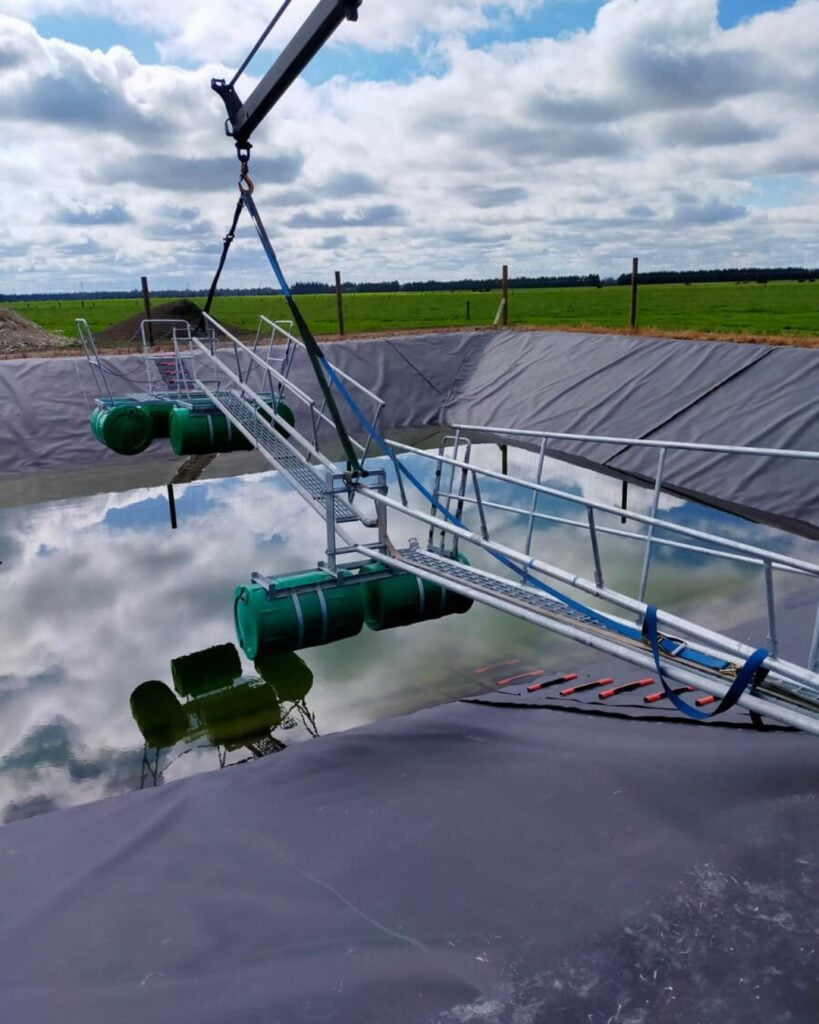
Installation requirements vary with the stirrer type and where it’s going. A pond or tank stirrer sits on its own float assembly and needs mooring lines to hold it in position, so the impeller works the full volume properly. A walkway and raft can be added if you want easy access for servicing, but it isn’t required. A sump stirrer is fixed-mounted and needs a secure bracket in a confined, often wet, space. All units need correctly rated power supply and control gear connected by a qualified electrician, but the electrical connection is only one part of the job.
Plucks stirrers are supplied ready to install (apart from electrical connection) and don’t require a purpose-built raft or frame. Plucks also offers installation and effluent system design if you’d rather have the mounting, positioning and commissioning handled as one job.
Common questions about effluent pond stirring
How do I know if my current stirrer is undersized?
The clearest signs are visible crusting, sludge build-up, or increasing odour despite the stirrer running. Pond dimensions, volume and solids loading are what determine correct sizing – Plucks uses actual measured dimensions on-site rather than estimates, so if something feels off, it’s worth getting the numbers checked rather than guessing.
Can one stirrer cover both a sump and a pond?
No – sumps, ponds, tanks, and saucers each need a stirrer matched to that specific storage type and geometry. Mounting and impeller placement all change depending on what it’s stirring.
Should an effluent stirrer run all the time?
Plucks stirrers are built for continuous operation, and on most ponds keeping the volume moving at all times is the simplest way to prevent settling and crusting. Some farms run stirrers on a timer or ahead of irrigation; whether that’s enough depends on solids loading and how quickly your pond separates. If you’re unsure, run it continuously and adjust from there.
Keeping your whole effluent system working together
Stirring is one part of a bigger system. If you’re looking at your effluent set-up more broadly, it’s worth reading up on effluent irrigation and screening plants – both work better when the effluent reaching them is consistently mixed.
Not sure what size stirrer your pond needs?
Get in touch with Plucks with your pond dimensions and we’ll size the right unit for it – or browse the full effluent stirrer range first.