
Why a Spring-Loaded Drawbar Belongs on Your Heavy Roller
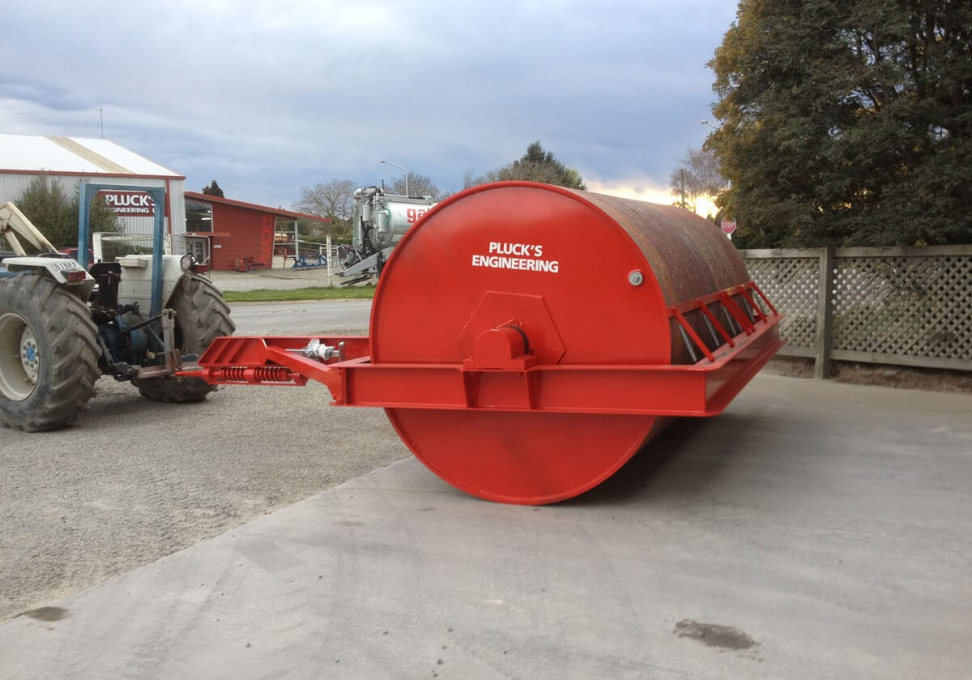
Towing a heavy roller over border-dyke humps or lumpy ground means a constant clunk through the tow bar pin. Here’s how Plucks’ spring-loaded drawbar cushions that connection, and why it’s worth fitting to a new or existing roller.
If you’ve towed a heavy roller across undulating ground, you’ll know the clunk through the tow bar pin every time the tractor speeds up or slows down. Border-dyke irrigation humps, old cultivation lines and uneven paddock edges all cause it. It makes for an uncomfortable day in the cab and keeps shock-loading the tow connection. Plucks built the spring-loaded drawbar specifically to cushion that movement between the tractor and roller.
Why does towing a roller cause this shock loading in the first place?
On flat, even ground, a roller tracks smoothly behind the tractor, and there’s not much for the operator to notice. Lumpy or undulating paddocks change that. The roller’s mass keeps moving at its own pace while the tractor speeds up, slows down, or changes direction, and that mismatch gets transmitted straight through a rigid tow bar pin. Border-dyke irrigation humps are a common culprit on Canterbury farms, but any property with rolling contour or old cultivation ridges will produce the same effect.
How does the spring-loaded drawbar fix it?
Instead of a fixed, rigid connection, the spring-loaded drawbar is mounted on the roller frame to cushion forward and backward movement between the roller and the tractor. As the towing load changes, the spring allows controlled movement at the connection rather than transmitting each change as a sharp jolt through the tow bar pin. The result is a smoother, quieter towing experience across uneven ground and when the tractor changes speed.
What does that mean for the operator and the tractor?
- A noticeably more comfortable day in the cab-no more feeling every rear-end jolt coming through the drawbar to the seat.
- Reduced shock loading through the tow connection, helping limit repeated jolts transferred toward the tractor over the course of a season.
- No change to how the roller itself performs-this is purely about smoothing the tow connection, not the ballast or ground contact.
Can it be added to a roller I already own?
Yes. The spring-loaded drawbar is available as an optional extra on new Plucks rollers, and as a retrofit option for rollers already on the farm.
What do farmers say about it?
“We are very pleased with how the Spring-Loaded Tow bar works, all my staff have commented on how much stress it takes out of a day when rolling and the banging and crashing on the tractor is gone, making it easier to drive and operate.”
It’s a small attachment that solves a jarring problem most farmers have simply learned to put up with. If your paddocks have any lump or roll to them, it’s worth asking about when you’re speccing your next roller-or retrofitting the one you already run.
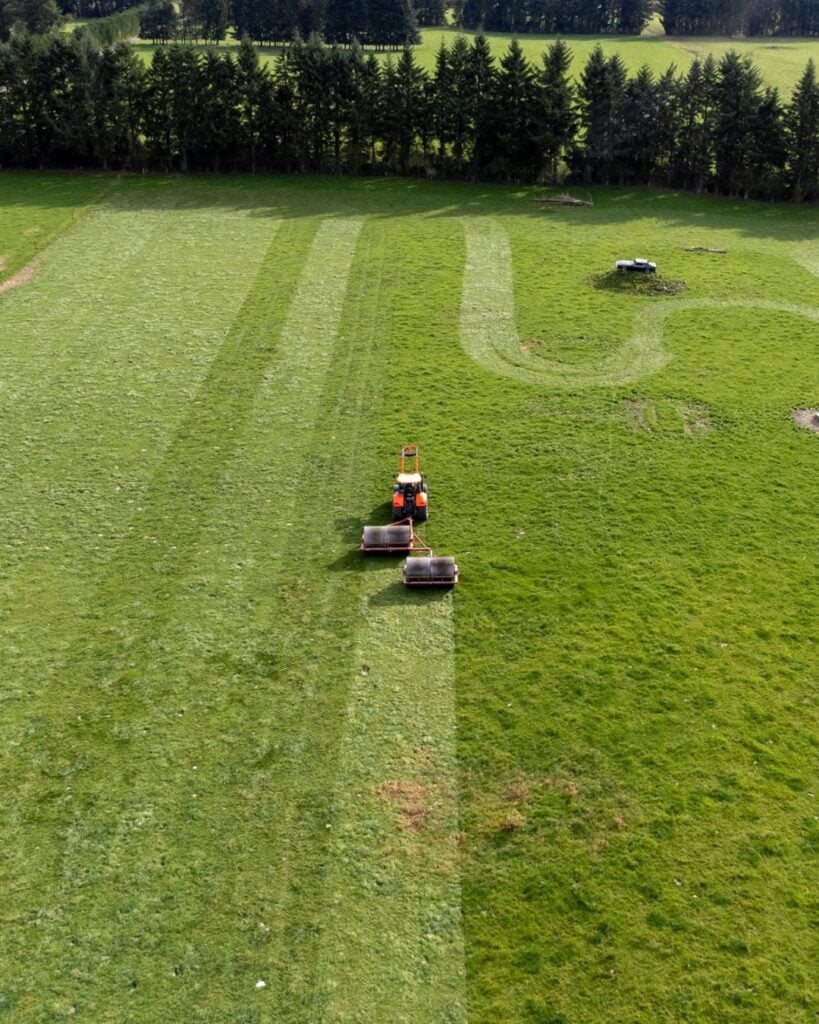
Want a smoother day in the cab?
Get in touch with Plucks to add a spring-loaded drawbar to your next roller, or ask about retrofitting the one you already run.
Common questions about spring-loaded drawbars
What is a spring-loaded drawbar used for?
It cushions the towing connection between a heavy land roller and the tractor, absorbing the shock loading that builds up on lumpy or undulating ground.
Does the spring-loaded drawbar affect how the roller performs?
No, it only smooths the tow connection. Rolling performance, ballast, and ground contact are unaffected.
Can I add a spring-loaded drawbar to my existing roller?
Yes, it’s available as a retrofit as well as an optional extra on new Plucks rollers.